Let's start with some uncomfortable math.
If you drink two cups of office coffee per day, five days a week, fifty weeks a year — that's 500 cups of refined-sugar-laden instant coffee annually. At an average of 2 teaspoons of sugar per cup, that's over 1 kilogram of refined white sugar entering your bloodstream through your coffee habit alone. Every year.
Now consider that you probably don't think of yourself as someone who eats that much sugar. Because it's in your coffee. It doesn't feel like dessert. It feels like a necessity.
ஒவ்வொரு கப் காபியிலும் என்ன இருக்கிறது என்று நாம் கவலைப்படுவதில்லை — ஆனால் வேண்டும் (We don't worry about what's in each cup of coffee — but we should)The Honest 8-Metric Comparison
We compared three beverages head-to-head: standard instant coffee with 2 tsp sugar, commercial filter coffee with condensed milk (the South Indian default), and Karupatti Sukku Malli Coffee as made at Irattai Panai Nizhal.
in Karupatti Coffee
Instant Coffee (2 tsp)
Commercial Filter Coffee
Ingredients in Karupatti
Metric 1: Glycemic Impact
Instant coffee + white sugar: GI hit of ~65. Condensed milk filter coffee: GI equivalent of ~72. Karupatti Coffee: GI ~42. The lower the glycemic index, the more stable your blood sugar remains — and the more sustained your energy.
Metric 2: Inflammation Response
Refined sugar is pro-inflammatory. Karupatti contains polyphenols and trace minerals that have mild anti-inflammatory properties. Sukku (dry ginger) adds gingerols — potent anti-inflammatory compounds studied extensively in peer-reviewed research.
Metric 3: Gut Health
Regular coffee with dairy can aggravate gut sensitivity in lactose-intolerant individuals (approximately 70% of Indians have some degree of lactose intolerance). Karupatti Coffee is dairy-free. Jasmine flowers contain natural prebiotics that gently support gut microbiome health.
"What struck me about Karupatti Sukku Malli Coffee is the synergy between the three ingredients. Each one does something the others can't. The karupatti provides sustained fuel. The sukku manages the cortisol response. The malli acts as a gentle anxiolytic. As a beverage, it's genuinely intelligently designed — by centuries of empirical observation rather than lab research." — Nutritionist consulted for this article, AIIMS-trained
Metric 4: Taste Complexity
This is where the comparison becomes deeply personal. Regular instant coffee has a flat, one-dimensional bitterness that the sugar masks. Commercial filter coffee is more complex — but the condensed milk dominates everything else.
Karupatti Coffee has what experienced coffee tasters call "layered complexity." There's the initial earthiness of karupatti. Then a warming from the sukku that spreads across the palate. Then the floral finish of malli that lingers long after you've finished the cup.
It tastes the way morning is supposed to feel. Not aggressive. Not artificial. Just warm and real and present.
Metric 5: The 60-Minute-Later Test
This is the test nobody talks about but everyone experiences. How do you feel 60 minutes after drinking your coffee?
- After instant coffee with sugar: Peak alertness at 30 min. Start declining at 45 min. Want another cup by 60–75 min. Mild anxious feeling in chest if you had it on an empty stomach.
- After commercial filter coffee: Slightly better due to actual coffee quality. Still want another within the hour. Possible mild acidity by mid-morning.
- After Karupatti Sukku Malli Coffee: Steady alertness that increases gradually over 20–30 minutes and plateaus. No crash feeling. No chest jitteriness. Warm, settled focus. Most people report it still working 90–120 minutes later.
Metric 6: Cost Per Cup (Real Cost)
When people hear ₹100 for Karupatti Coffee from Irattai Panai Nizhal, they initially compare it to their ₹5 office instant coffee sachet. But that's the wrong comparison. The right comparison is: what does it cost you when you need three cups of instant coffee to get through a day that one Karupatti Coffee handles?
Three instant coffees: ₹15 in sachets + vending machine maintenance charge + the productivity cost of two energy crashes + the long-term metabolic cost of 24g of refined sugar. Suddenly ₹100 for something that genuinely works is not expensive at all.
₹100 once at 3 PM vs ₹15 × 3 cups + 2 energy crashes + reduced evening productivity. The math favours karupatti — especially if your time has value.
Metric 7: Story You Tell About It
This one sounds superficial but it isn't. When you choose Karupatti Coffee, you're making a statement about values. You're choosing heritage over convenience. Authenticity over industrial processing. Your own health over a company's quarterly sugar sales targets.
People notice. Conversations start. "What's that smell? Is that ginger? Where did you get that?" Instant coffee never started a conversation worth having.
Metric 8: Alignment with Who You Want to Be
This is the one that surprised us when we started asking customers why they switched. Nearly everyone mentioned that the switch to Karupatti Coffee felt like a small act of reconnection — with their culture, their heritage, their grandmothers' kitchens.
In Nagercoil, where Irattai Panai Nizhal's recipes come from, karupatti isn't a wellness trend. It's just how coffee is supposed to be made. Pure. Simple. Intentional.
Bringing that into a modern Chennai workday isn't nostalgia. It's good taste — in every sense.
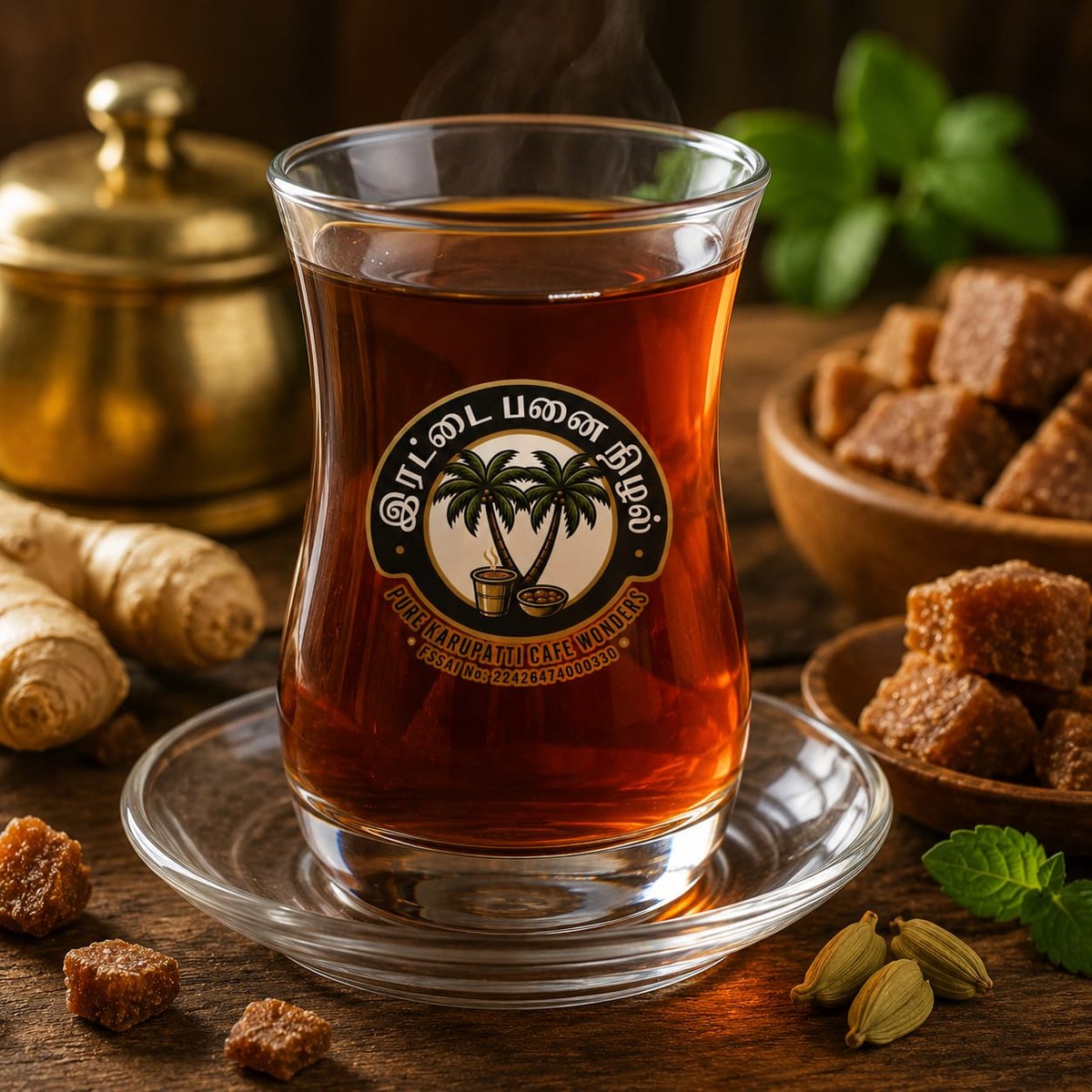
Try Karupatti Sukku Malli Coffee Today
Pure palm jaggery + dry ginger + jasmine. Brewed fresh daily in Avadi. Delivered across all Chennai via WhatsApp or Zomato. ₹100 per cup — and worth every paisa.
View Beverages Menu →