If you asked most HR managers to describe their office beverage program, you'd hear some variation of: "We have vending machines on each floor" or "The office boy makes chai twice a day."
If you asked those same HR managers what their biggest people challenges are, you'd hear: employee engagement, retention, cultural belonging, afternoon productivity drops, and the difficulty of making the office feel like more than just a place where work happens.
The gap between these two conversations — the beverage program and the people challenges — is much smaller than most HR professionals realize.
Why Office Beverage Culture Is an HR Lever, Not a Facilities Function
Office beverages are the highest-frequency touchpoint in your workplace. Your employees interact with your beverage program more often than they interact with their managers, more often than they attend company events, more often than they read internal communications. If you're treating it as a facilities procurement decision, you're missing a daily cultural intervention point.
What your beverage program communicates to employees — whether you intend this or not:
- Instant vending machine coffee: "We provide the minimum necessary fuel."
- Decent commercial filter coffee: "We've thought a little about this."
- Authentic traditional beverage catering: "We've thought carefully about your wellbeing and your cultural identity."
Employees read these signals accurately. They always do.
நிறுவனம் ஊழியர்களை எப்படி நடத்துகிறது என்பது சிறிய விஷயங்களில் தெரிகிறது (How a company treats its employees is visible in the small things)The Science Behind Office Beverage Timing
An intentional office beverage program isn't just about what you serve — it's about when. Understanding your team's energy curve allows you to time beverages for maximum impact.
The 9:00–9:30 AM Window
Cortisol is naturally elevated 20–30 minutes after waking and peaks between 8–9 AM. Adding aggressive caffeine at this point doesn't meaningfully boost alertness — it adds to cortisol that's already there, with the risk of pushing into overstimulation. Better options for morning: Ragi Koozh or Kambu Koozh — sustained energy release, no cortisol spike.
The 10:00–11:00 AM Window
Natural cortisol starts declining. This is actually when caffeine is most effective — it supplements declining natural alertness rather than stacking on an already-high cortisol peak. Karupatti Coffee at this window provides caffeine benefit with the additional dry ginger circulation boost. Ideal for pre-meeting focus.
The 2:00–3:00 PM Window
Post-lunch blood sugar dip. Traditional Siddha medicine prescribes Panakam or Nannari Sarbath at this point — low-GI natural sweetness that gently supports blood sugar without spiking and crashing. An increasingly popular choice among Chennai offices who've made the switch.
The 3:30–4:30 PM Window
The dangerous productivity valley. This is where traditional beverages show the most measurable difference. Karupatti Coffee at 3:30 PM versus vending machine coffee at 3:30 PM produces a measurably different 5 PM outcome — the karupatti's low GI supports sustained focus, while vending machine sugar accelerates the crash.
Avoid: Instant coffee
Also: Ginger Tea
Also: Nannari
Avoid: Sugar-laden drinks
A 90-Day Beverage Culture Transformation Plan
Days 1–30: The Pilot Phase
Select a team of 15–25 employees across different seniority levels and departments. Partner with Irattai Panai Nizhal for daily catering. Measure: participation rate, self-reported afternoon energy (5-question Likert scale survey), and sick day comparison from previous quarter.
Days 31–60: The Expansion Phase
Present pilot data to leadership. Expand to the full organisation. Introduce variety — not just coffee and tea, but the full traditional menu including millet drinks and herbal coolers. Create visible branded serving moments (10 AM and 3 PM are ideal touchpoints to make formal).
Days 61–90: The Culture Integration Phase
Weave the beverage program into company rituals. A specific traditional drink at monthly all-hands. A "Traditional Friday" where different regional beverage varieties are featured. Begin tracking the program in employee NPS surveys as a specific benefit.
"The moment we started treating the beverage program as a people strategy rather than a facilities decision, everything about it changed. The conversation we had about it with leadership changed. The way employees talked about it changed. Even the vendor relationship changed — Irattai Panai Nizhal's founder genuinely cares about what they're making. That authenticity transfers." — Head of HR, Chennai-based SaaS company
Measuring Your Office Beverage Culture ROI
Track these four metrics to quantify the impact of your beverage program transition:
- Participation rate: What % of employees use the beverage service? (Target: 80%+ within 30 days)
- Cultural belonging score: Include a specific question about beverage program satisfaction in your quarterly engagement survey
- Sick day frequency: Compare quarter-over-quarter after the switch
- Afternoon self-reported productivity: A simple weekly pulse survey — "How was your afternoon energy on a scale of 1–5?" Run for one month before and after the switch
"Switching our beverage program from vending machines to traditional catering costs approximately ₹1,000–2,000 more per month per 10 employees. Based on pilot data, this generates measurable improvement in afternoon productivity and cultural belonging scores. The free trial costs us nothing to discover if this is true for our team."
Why Traditional Is the Future of Corporate Wellness in India
There is a larger cultural shift happening in urban India that forward-thinking HR managers are tracking: a significant, growing preference for authentic, heritage-rooted products over generic imported or industrial alternatives. This is visible in food delivery data (traditional home-style meals outpacing fast food), in apparel (handloom and regional craft growing faster than fast fashion), and increasingly in workplace wellness expectations.
The employees entering your workforce in 2024 and 2025 grew up in an India that celebrates local brands, traditional knowledge, and cultural identity. Offering them Nescafé from a vending machine when you could offer them Karupatti Sukku Malli Coffee from a Nagercoil heritage recipe is not just a wellness choice — it's a cultural statement about what kind of company you are building.
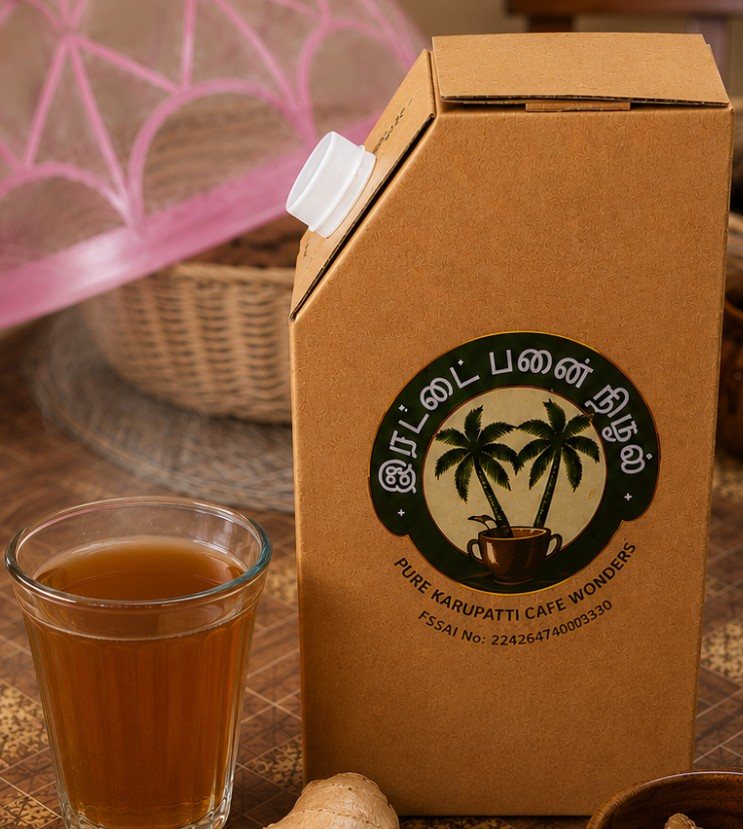
Partner With Irattai Panai Nizhal for Your Office
Corporate plans from ₹15,000/month. Daily delivery, customizable menu, free trial for new clients. HR managers — this is the benefit your team will actually talk about.
See Corporate Plans →Build an office beverage culture that your employees will mention in their Year 1 anniversary posts. Make it authentic. Make it traditional. Make it Irattai Panai Nizhal.