The decision started with a spreadsheet, as most corporate decisions do.
Meena, HR Manager at a mid-size IT services company in Guindy, was looking at two numbers side by side: their employee sick day average (4.2 days per year per employee) and their CSAT scores from the internal culture survey (beverages and food rated 3.1/5, consistently the lowest-rated workplace amenity).
"I wasn't expecting to solve both problems with one change," she told us. "I was honestly just trying to improve the beverage rating. What happened afterward surprised me."
The Problem With Corporate Vending Machines — What Nobody Tracks
Most companies track vending machine utilization (how many cups dispensed). Very few track what those cups are doing to their employees.
The typical vending machine coffee contains instant coffee powder, non-dairy creamer, artificial flavor, and refined sugar — dispensed in a ratio optimized for palatability, not health. A 200-person office using vending machines twice daily is consuming approximately 400 cups of refined-sugar-laden instant coffee per day — 365,000 cups of industrial coffee annually.
நிறுவன காபி இயந்திரம் நல்லது என்று நினைக்கிறீர்களா? கணக்கு போட்டுப் பாருங்கள் (Think the office coffee machine is good? Run the numbers)The downstream effects of this — chronic low-grade inflammation from refined sugar, afternoon productivity crashes, caffeine dependency without meaningful alertness benefit — are real but invisible on any standard HR metric.
Until Meena started tracking them.
The Switch: What Changed and How
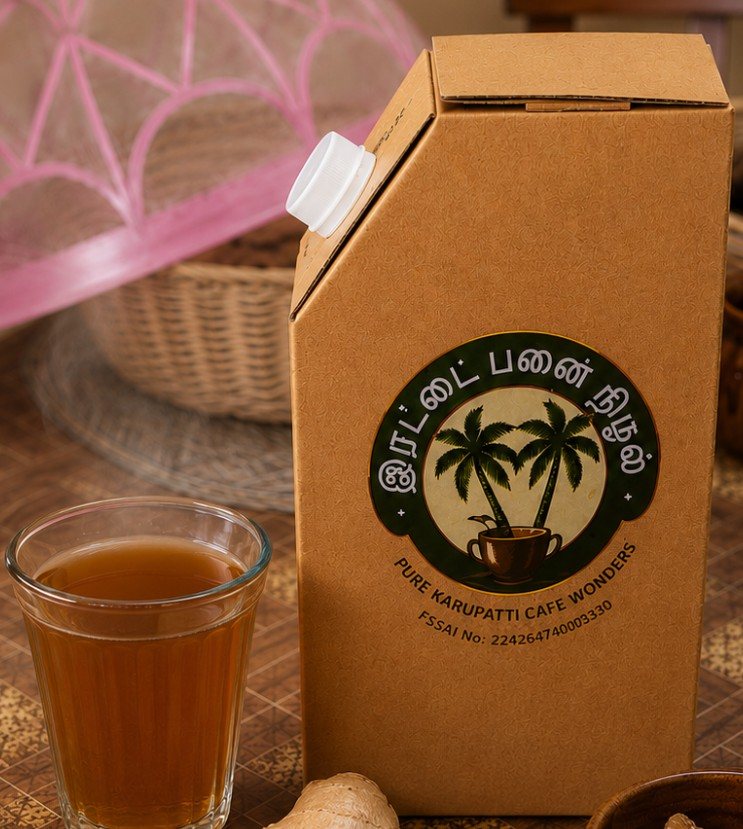
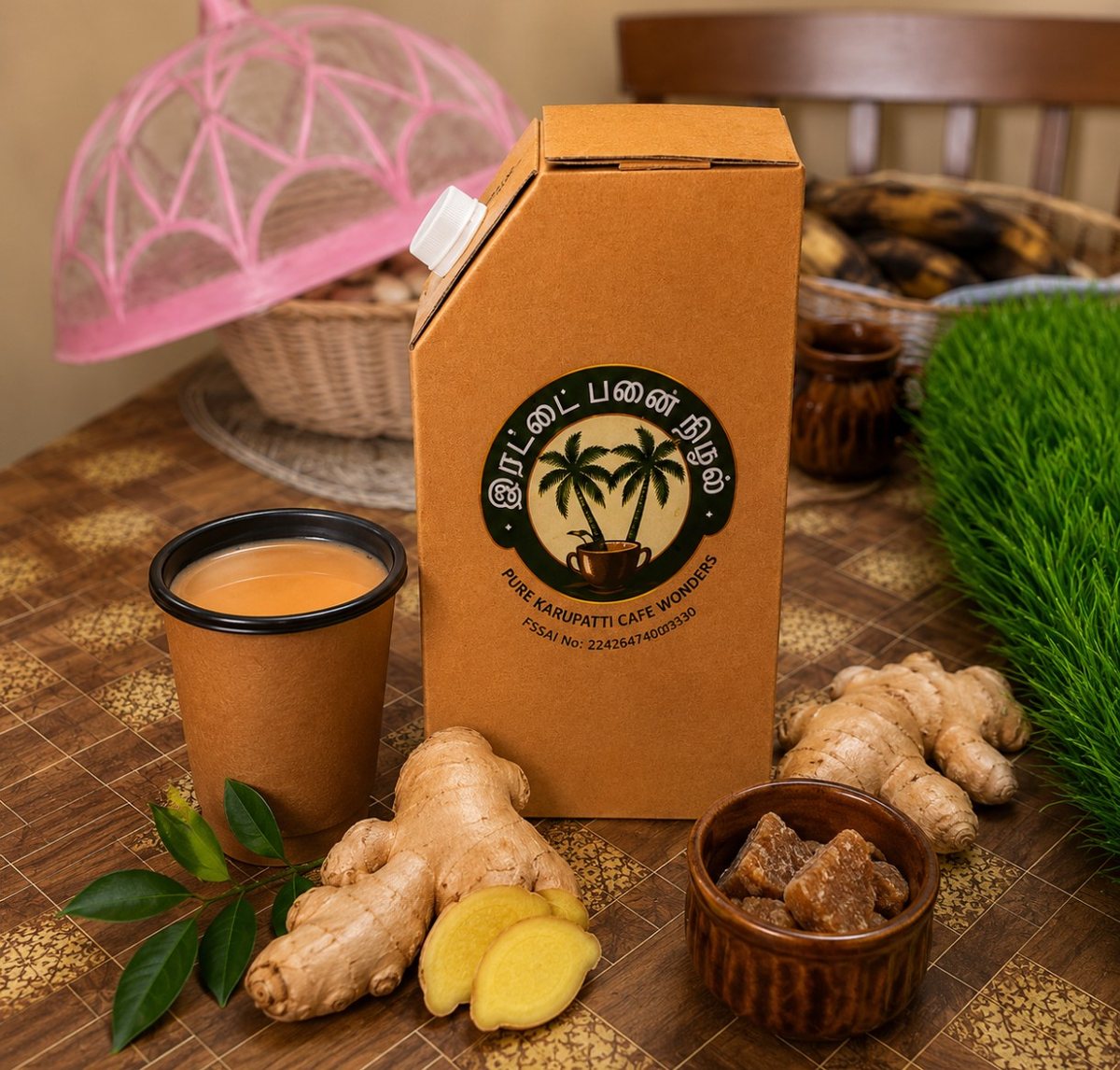
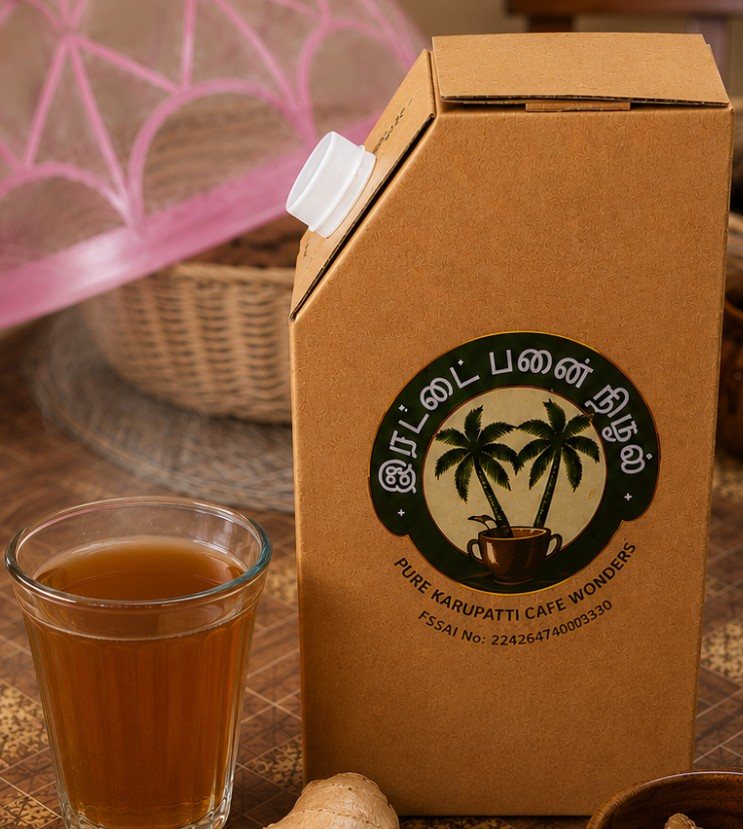
Irattai Panai Nizhal's corporate catering service was piloted with 50 employees for the first month. Daily morning delivery of Karupatti Sukku Malli Coffee, Ginger Tea, and Lemon Tea paired with traditional Thattai snacks. One bulk delivery each morning. No machines to maintain. No technical staff needed.
The rollout to the full 200-person company happened in Week 6, when the pilot group's participation rate hit 94% — essentially everyone who tried it, stayed with it.
Rate (Week 6)
(was 3.1/5)
(6-Month Comparison)
Completion Rate
The Numbers After 6 Months
Meena shared the 6-month review data with us (with company permission, identifying details changed):
Sick Day Reduction
Average sick days per employee per year dropped from 4.2 to 3.3 — a 21% reduction. This is a single data point from one company over 6 months, not a controlled clinical trial. But the timing correlation with the beverage switch, and the consistency of the effect across departments, was notable enough to be included in their Q3 HR report to leadership.
"We cannot say definitively that traditional beverages caused the sick day reduction. But we can say that no other significant workplace variable changed during that period. And the reduction was consistent across all four floors of our building." — Meena, HR Manager, Guindy
Afternoon Productivity Proxy
The company tracks task completion rates by time of day through their project management tool. The 3–5 PM slot, historically their least productive window, showed an 18% improvement in task completion rate after the switch. Again — correlation, not proven causation. But meaningful correlation.
Employee Satisfaction
From 3.1/5 (consistently the lowest-rated benefit) to 4.7/5 (now the highest-rated). This alone changed the nature of benefits conversations during hiring. Multiple candidates mentioned the traditional beverage catering during offer-stage discussions as a positive differentiator.
What Made Employees Actually Use It
The unexpected finding from the pilot was what drove adoption — it wasn't health. It was identity and conversation.
"The first week, people were interested because it was new," Meena explained. "But what sustained the interest was something I didn't plan for: people started talking about their grandmothers. About growing up in Tamil Nadu. About how the Karupatti Coffee tasted like something from home."
In a company where 70% of employees were from Tamil Nadu and had moved to Chennai from smaller towns, the beverage service became an unexpectedly powerful cultural touchpoint. It wasn't just a drink. It was a daily micro-reconnection with heritage.
When you serve authentic traditional beverages in a Chennai office, you're not just offering a healthier alternative to vending machine coffee. You're giving Tamil employees a daily moment of cultural recognition. In a corporate environment that can feel generic and culture-neutral, this has measurable value for engagement and retention.
What It Cost vs. What It Saved
The math is simpler than most HR managers expect:
- Previous cost: Vending machine lease (₹4,500/month) + supplies (₹28,000/month) + maintenance calls (₹2,000/month avg) = ₹34,500/month
- New cost: Irattai Panai Nizhal corporate catering at the Growth Plan = ₹35,500/month
- Net cost difference: +₹1,000/month additional investment
- Sick day cost reduction (conservative estimate): If average sick day costs ₹3,500 in productivity loss, and they reduced by 0.9 days × 200 employees = 180 fewer sick days per year = ₹6,30,000 annually in recovered productivity
Paying ₹1,000 more per month (₹12,000 per year) to recover ₹6,30,000 in productivity. That's a 52x return on the investment differential.
The company is now in its second year with Irattai Panai Nizhal. Meena has recommended the service to four other HR managers in her network. Two of them have already switched.
Corporate Tea Break Catering — Chennai-wide
Daily delivery to offices across Avadi, OMR, Guindy, T Nagar, Anna Nagar, Velachery, Tambaram and more. Free trial for new corporate clients. Minimum 10 persons.
See Corporate Plans →The vending machine isn't just an inferior product. It's an inferior idea. The idea that workplace wellness can be delivered by an unattended machine is the problem. Traditional beverage catering — made fresh that morning, delivered with genuine care, rooted in authentic cultural heritage — is a fundamentally better approach.
And the numbers agree.